
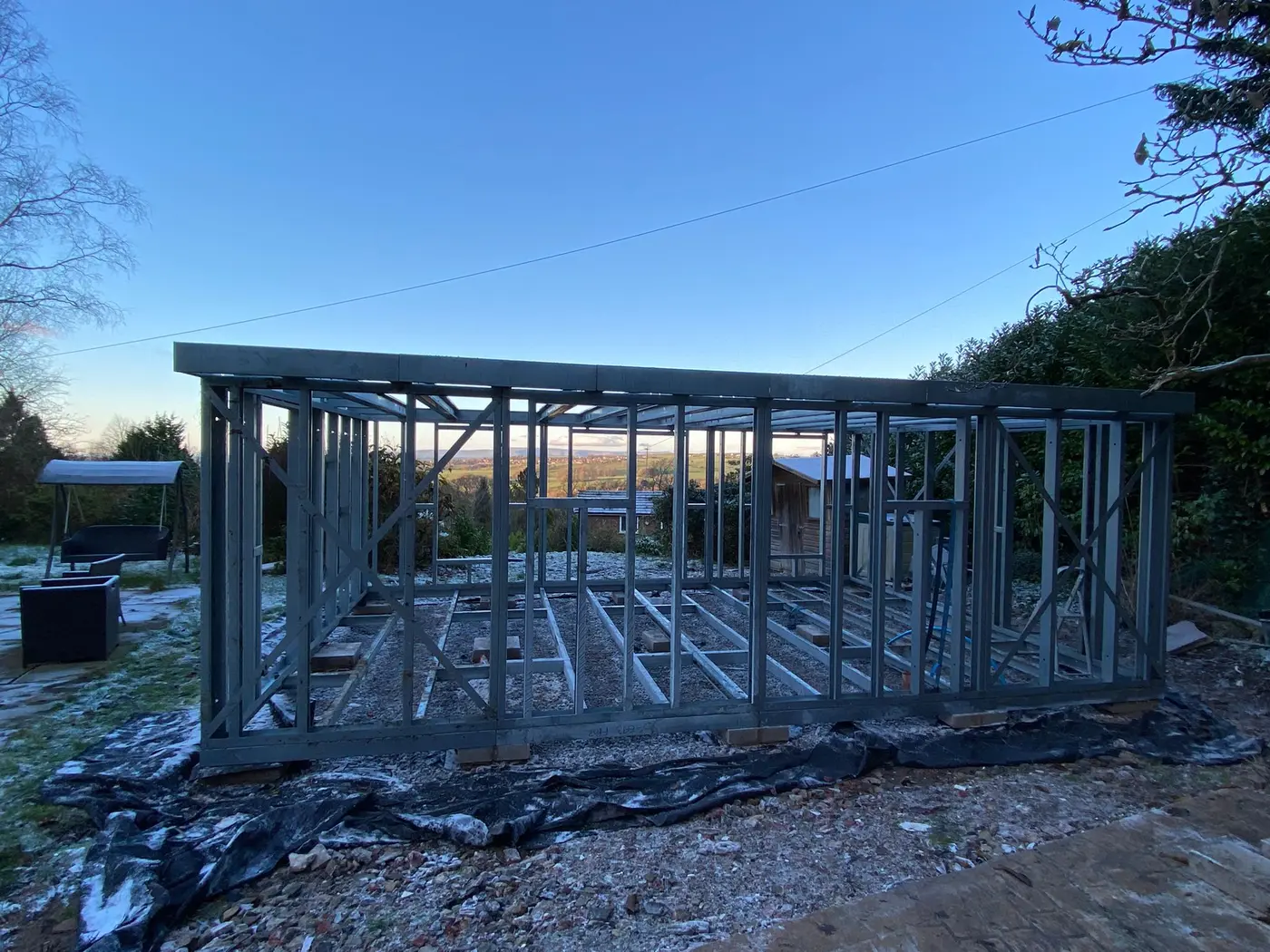
Where steel is strong
Factory-formed steel profiles can provide consistent geometry and predictable panel layouts. Steel does not rot or provide food for insects, and it suits repeat manufacture and large openings when properly engineered. Those benefits depend on correct storage, assembly, fixings and corrosion-aware detailing.
Where timber remains practical
Timber is widely understood, can be cut and adjusted on site and may be sourced through familiar local channels. It also has different thermal conductivity. Quality still varies, moisture must be controlled and structural sizes must match the design rather than habit.
Thermal performance is an envelope question
Steel conducts heat readily, so insulation continuity and thermal-bridge control need deliberate design. Timber framing is not automatically high performing either: studs, gaps, membranes, junctions and workmanship affect the result. Compare complete U-value and condensation strategies.
Forti Nova's view
Steel is well suited to projects that benefit from precise panel manufacture, repeatable dimensions and planned structural openings. Timber or another method may suit projects with different design, installer or supply requirements.